

Outbound marketing is about knocking on doors. Cold calls, banner ads, flyers, anything that interrupts people who never asked to hear from you. Inbound is the opposite. You make something useful, people find it, and they show up already interested.
It’s slower to get going than a cold campaign, but it usually brings in better customers, and it keeps working long after you hit publish. The catch is that it only works if you get the basics right.
There are five of them. Here’s how each one works, with examples you can use.
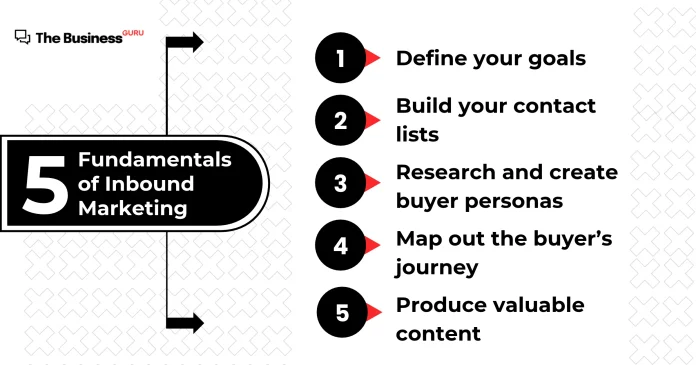
The five fundamentals:
- Define your goals
- Build your contact lists
- Research and create buyer personas
- Map out the buyer’s journey
- Produce valuable content
What Is Inbound Marketing?
Inbound marketing means attracting customers with helpful content and real relationships instead of chasing them with ads and cold outreach. Your blog posts, videos, emails, social posts, and search rankings do the pulling.
| Factors | Inbound Marketing | Outbound Marketing |
|---|---|---|
| Approach | Customers find you | You go find customers |
| Main tools | Blogs, SEO, email, social, video | Cold calls, TV, print, cold email |
| Cost over time | Gets cheaper as content builds up | Stays high, stops when spending stops |
| How customers feel | Helped | Interrupted |
| Speed | Slower at first | Faster at first |
1. Define Your Goals
Every inbound campaign should start with one question: what do you want to achieve with this? More website visitors? More leads? More sales? Better customer retention?
Pick a goal you can measure, then put a number and a date on it. “Get more traffic” is vague. “Reach 5,000 monthly visitors and 100 new email sign-ups in six months” is something you can work toward and check.
How to Set Inbound Marketing Goals You Can Actually Track
Write your goals down and make each one specific:
- Traffic: monthly visitors from search and social
- Leads: email sign-ups, form fills, downloads
- Sales: new customers from inbound channels
- Retention: repeat purchases or renewals
Without goals, it’s easy to publish a lot of content and have no idea whether any of it helped.
2. Build Your Contact Lists
A contact list is simply the people who’ve said, “Yes, I’d like to hear from you.” Over time it becomes one of the most valuable things your business owns, because you can reach these people directly without paying a platform for every message.

Ways to Grow Your Contact List the Right Way
- Newsletter sign-ups on your website and blog
- Lead magnets, like a free checklist, ebook, or template, in exchange for an email address
- Events and trade shows, where people hand over their details
- Contests and giveaways, as long as people know they’re joining your list
- Networking, such as business cards, followed by a personal message and an easy way to opt in
Always get permission. Buying a list or adding people without asking hurts your email deliverability and your reputation, and in many places it breaks privacy rules too.
How to Use a CRM to Keep Track of Your Contacts
Once your list grows past a few dozen people, a spreadsheet is no longer enough. A CRM, or customer management tool, keeps everyone in one place. It shows who you’ve talked to, what they’re interested in, and how close they are to buying.
That way, you can follow up at the right time with the right message instead of sending the same email to everyone.
3. Research and Create Buyer Personas
A buyer persona is a semi-fictional profile of your ideal customer. It helps you stop writing for “everyone” and start writing for a real type of person.
How to Build a Buyer Persona From Your Own Customer Data
Start with the people who already buy from you. Look for patterns, then write them up as a short profile.
| Persona Detail | Example |
|---|---|
| Name | Priya, the Busy Shop Owner |
| Age and location | 34, Kathmandu |
| Job | Runs a small clothing store |
| Goals | More online orders, less time spent on marketing |
| Problems | Tight budget, no marketing team |
| Where she spends time | Instagram, Facebook, WhatsApp |
| What she searches for | “How to get more customers online” |
Good places to find this information include your website analytics, CRM, social media insights, Google Ads data, and, best of all, a few real conversations with customers.
How to Use Buyer Personas to Shape Your Marketing
Once you know who you’re talking to, a lot gets easier:
- Content: write about the problems she actually has
- Tone: match how she talks, not how a textbook does
- Channels: show up where she spends time
- Offers: make them fit her budget and goals
If your persona cares about the environment, for example, a post on how your product cuts waste will get far more attention than a generic sales message.
4. Map Out the Buyer’s Journey
The buyer’s journey is the path someone takes from “I have a problem” to “I bought something.” Most people go through three stages. If you know which stage someone is in, you know what to say to them.
In this stage, you should provide content that helps customers make a purchase decision. This could include product demonstrations, price comparisons, coupon codes, and customer testimonials.
The Three Stages of the Buyer’s Journey and What Content Fits Each One
| Stage | What the Customer Is Thinking | Content That Works | Example |
|---|---|---|---|
| Awareness | “I have a problem, but I’m not sure what it is or how to fix it.” | Blog posts, guides, videos, checklists | “Why Is My Website Not Getting Any Visitors?” |
| Consideration | “I know my problem, and I’m comparing solutions.” | Comparisons, case studies, webinars, testimonials | “SEO vs. Paid Ads: Which Is Better for a Small Shop?” |
| Decision | “I’m ready to choose someone.” | Demos, free trials, pricing pages, reviews, offers | “Book a Free 30-Minute Consultation” |

Awareness Stage: Help Without Selling
At this point, people are just trying to understand what’s going on. Don’t pitch. Answer their questions clearly. If you do it well, they’ll remember you later.
Consideration Stage: Show Why Your Solution Fits
They know what they need, and they’re looking at options. This is the time for comparison guides, case studies and customer stories that show how you’ve helped people like them.
Decision Stage: Make It Easy to Say Yes
They’re nearly ready. Give them what they need to feel sure: clear pricing, a demo, a free trial, honest reviews and a simple way to get in touch. Remove anything that makes buying harder than it should be.
5. Produce Valuable Content
Content is how inbound marketing actually happens. Blog posts, videos, ebooks, infographics, email newsletters, podcasts and social posts are what bring people in and keep them interested.
The best content does one of three things: it teaches something, solves a problem or entertains. If a piece does none of those, it probably isn’t worth publishing.
Five Ways to Use Content to Attract and Convert Customers
- Blog regularly. Consistent, useful posts are still one of the best ways to get found on Google.
- Share it on social media. Post things people actually want to read, not just promotions.
- Send lead nurturing emails. Follow up with helpful tips and relevant offers, not constant sales pitches.
- Show you know your field. Guides, ebooks, and white papers build trust and authority.
- Optimize for SEO. Use the words your customers search for, so the right people can find you.
For more on bringing in customers online, our guide to the benefits of digital marketing covers the wider picture.
How Inbound Marketing Works in Practice
Once the five fundamentals are in place, inbound follows a simple flow. Here’s what each step looks like.
| Step | What You’re Doing | Common Tools |
|---|---|---|
| Attract | Draw in strangers with useful content | Blog, SEO, social media, video |
| Convert | Turn visitors into leads | Lead magnets, forms, landing pages |
| Close | Turn leads into customers | Email nurturing, CRM, demos |
| Delight | Keep customers happy so they come back and refer others | Great service, feedback, follow-ups |
| Analyze | Check what’s working and improve it | Google Analytics, CRM reports |
How Inbound Marketing Has Changed in 2026
The five fundamentals haven’t changed. You still need goals, a contact list, buyer personas, a buyer’s journey and good content. What has changed is how people find that content and what happens once they do.
Most of it comes down to AI search. When someone asks Google or an AI assistant a question, they often get a written answer right there and never open a website.
More Searches End Without a Click
One 2026 industry report puts zero-click searches at around 60% of all Google queries. Another analysis found that click-through rates fell from about 15% to 8% when an AI Overview appears in the results.
So you can rank well and still get fewer visitors than before. That’s annoying, but it doesn’t mean inbound has stopped working. It means the click is no longer the only thing worth measuring.
Being Cited Now Matters as Much as Being Ranked
Search used to be about getting your page to position one. Now it’s also about being a source people and AI tools pull from. Some marketers call this answer engine optimization: the goal is to be cited or mentioned in AI-generated answers, not just ranked.
You don’t need to learn a whole new craft. What helps is mostly what good inbound content already does:
- Answer the question directly and early on the page
- Use clear headings and short, plain paragraphs
- Include real examples, numbers, and original details
- Show who wrote it and why they know the topic
- Update your pages so they don’t look stale
What’s Different and What Isn’t
| Factor | Before | Now |
|---|---|---|
| How people find you | Mostly Google results and clicks | Google, AI answers, social media, and word of mouth |
| Goal of content | Rank and get the click | Get found, cited, and remembered |
| What gets rewarded | Volume and keywords | Real expertise and clear answers |
| Numbers to watch | Rankings and traffic | Branded search, mentions, leads, and revenue |
| Buyer stage on arrival | Often early | Often well into their research |
What hasn’t changed: goals, personas, the buyer’s journey, useful content and a permission-based email list.
Final Thoughts
Inbound marketing isn’t complicated, but it does take patience. Know what you want, know who you’re talking to, meet them where they are in their journey, and give them something genuinely useful.
The way people find you keeps changing, but the basics stay the same. Start small. Pick one goal, write one persona, and publish one helpful piece this week. Then build from there.
Need help building your inbound strategy? A marketing team like Jo Marketing can help you plan it and get it running.

